- California State Propositions
- Paramount has Aquired Warner Bros. it’s Official
- Metrolink Fare Increase Starts Today
- LA Dodgers Vs. Atlanta Braves
- Jefferson Vs. Fremont High School
- Los Angeles Heat Wave Forecast
- SoCal Coastal Weather Alert
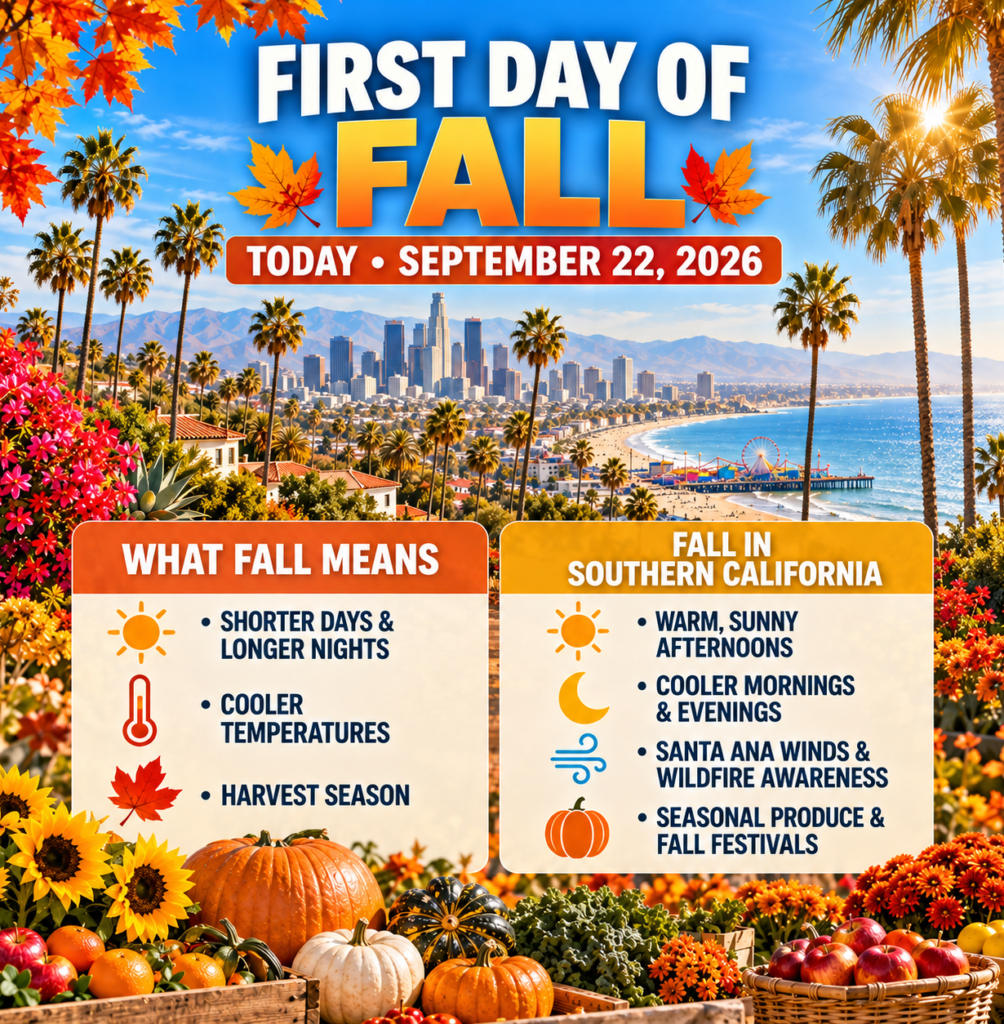
- First Day of Fall September 22, 2026
- The 78th Emmy Awards 2026
- Catalina Island off the Coast of California set to eliminate Deer
First Day of Fall September 22, 2026
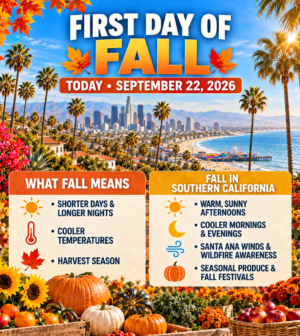
Today, Tuesday, September 22, 2026, marks the beginning of fall throughout the Northern Hemisphere. However, fall does not officially begin until the autumnal equinox occurs at approximately 5:05 p.m. Pacific Daylight Time. Until then, it is technically still summer.
Astronomical fall will continue until the winter solstice at approximately 12:50 p.m. on Monday, December 21, 2026.
What happens during the fall equinox?
The equinox occurs when the sun crosses directly above Earth’s equator. At that moment, neither the Northern nor Southern Hemisphere is tilted toward the sun, so both receive almost equal amounts of sunlight.
The word “equinox” comes from Latin words meaning “equal night.” Day and night are close to 12 hours each, although they are not perfectly equal because Earth’s atmosphere bends sunlight and makes the sun appear above the horizon slightly longer.
Beginning tonight:
- Daylight will gradually decrease.
- Nights will become longer.
- The sun will appear lower in the Southern California sky.
- Temperatures will generally begin trending cooler.
- This pattern continues until the winter solstice, the shortest day of the year.
The equinox also marks the beginning of spring in the Southern Hemisphere.
What does the fall season mean?
Fall is a transitional season between the heat and long daylight hours of summer and the cooler, shorter days of winter. It is commonly associated with:
- Harvesting late-summer and autumn crops
- Cooling temperatures and earlier sunsets
- Trees entering dormancy and leaves changing color
- Migration and seasonal preparation among wildlife
- Fall festivals, football, Halloween and Thanksgiving
- Seasonal foods such as apples, pears, squash, pumpkins and sweet potatoes
Meteorologists use a different calendar for weather statistics. Meteorological fall began September 1 and runs through November 30, while astronomical fall begins with today’s equinox.
What fall looks like in Southern California
Fall in Los Angeles does not always bring immediate sweater weather. September and October can remain hot, particularly in inland valleys. Southern California’s seasonal change is usually more subtle than in colder parts of the country:
- Cooler mornings and evenings
- Earlier sunsets
- Warm, sunny afternoons
- Clearer skies after the summer marine layer fades
- Changing leaves in selected mountain, canyon and inland areas
- Cooler ocean temperatures and fewer beach crowds
- Seasonal produce appearing at farmers markets
- The beginning of the region’s rainy season, although meaningful rain may not arrive until later
Fall also brings the possibility of Santa Ana winds—dry, gusty winds that can produce unusually warm weather and rapidly increase wildfire danger when vegetation is dry. Residents should continue monitoring red-flag warnings and local fire conditions throughout the season.
In short, fall officially arrives in Los Angeles at 5:05 p.m. today, but Southern California may continue feeling like summer for several more weeks.