- DoorDash Buys Instacart for $17 Billion
- L.A. Coastal Cities High Tides and Flooding
- Fall Back One Hour Halloween Night
- Vote For Rhonda Haymon “Superior Court Judge” Seat 64
- Bryson Fire Near Mulholland Hwy in Malibu
- California State Propositions
- Paramount has Aquired Warner Bros. it’s Official
- Metrolink Fare Increase Starts Today
- LA Dodgers Vs. Atlanta Braves
- Jefferson Vs. Fremont High School
DoorDash Buys Instacart for $17 Billion
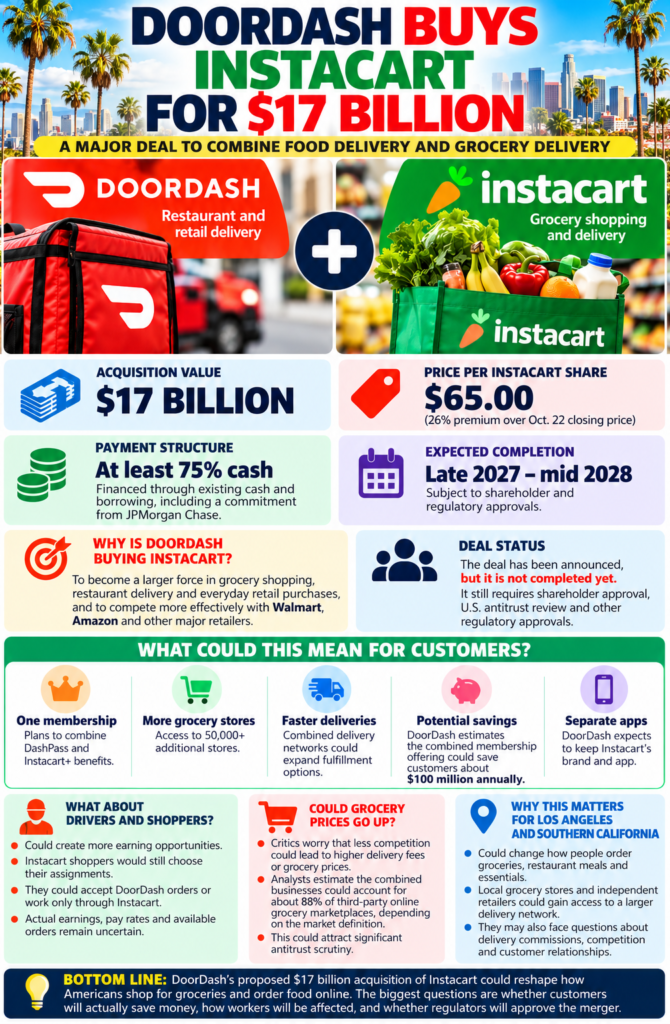
DoorDash has announced a $17 billion agreement to acquire Instacart, bringing together two of America’s largest delivery platforms in a major expansion of the online grocery and food delivery industry.
The acquisition, announced Thursday, October 29, 2026, would combine DoorDash’s restaurant and retail delivery network with Instacart’s grocery shopping and delivery services.
Important: The deal has been announced, but it has not been completed. It still requires shareholder and regulatory approvals.
Key details of the $17 billion deal
Acquisition value
$17 billion
Price per Instacart share
$65.00
Payment structure
At least 75% cash
Expected completion
Late 2027–mid 2028
Source: DoorDash and Instacart’s October 29 acquisition announcement.
DoorDash is offering a 26% premium over Instacart’s October 22 stock closing price. Instacart’s board unanimously approved the agreement.
DoorDash plans to finance the cash portion through existing cash and borrowing, including a financing commitment from JPMorgan Chase.
Why is DoorDash buying Instacart?
The acquisition is part of DoorDash’s strategy to become a larger force in grocery shopping, restaurant delivery and everyday retail purchases.
DoorDash is already known for restaurant takeout and delivery, while Instacart specializes in groceries from supermarkets and other retailers.
Together, the companies want to compete more effectively with major retailers such as Walmart and Amazon, which have invested heavily in grocery delivery, online shopping, technology and subscription memberships.
What will this mean for customers?
The companies have outlined several proposed benefits:
-
One subscription membership: Plans to combine DashPass and Instacart+ benefits into a single membership offering.
-
More grocery stores: Instacart customers could gain access to more than 50,000 additional stores.
-
Faster deliveries: Combining delivery networks could expand fulfillment options.
-
Potential savings: DoorDash estimates the combined membership offering could save customers approximately $100 million annually.
-
Separate apps: DoorDash expects to preserve Instacart’s brand and app after the acquisition.
These are company plans and projections, not guaranteed customer savings or service changes.
What does the merger mean for delivery drivers and Instacart shoppers?
DoorDash says the combination could create more earning opportunities for independent contractors.
Instacart shoppers would retain the ability to choose their shopping assignments, and DoorDash says they could decide whether to accept DoorDash orders or continue working exclusively through Instacart.
However, actual earnings, pay rates, tipping arrangements and available orders after the merger remain uncertain.
Could the merger lead to higher grocery prices?
This is one of the biggest questions surrounding the deal.
While DoorDash argues that combining operations will reduce costs and improve convenience, critics worry that less competition could eventually lead to higher delivery fees or grocery prices.
According to an analyst estimate reported by MarketWatch, the combined businesses could account for approximately 88% of third-party online grocery marketplaces, depending on how that market is defined. That concentration could attract significant antitrust scrutiny.
When will the merger become official?
DoorDash expects the transaction to close in late 2027 or the first half of 2028.
Before then, the companies must secure shareholder approval and clear U.S. antitrust review, along with other required regulatory approvals. Until closing, both companies will operate independently.
Why this matters for Southern California
For Los Angeles and Southern California consumers, the acquisition could eventually change how people order groceries, restaurant meals and household essentials.
Local grocery stores and independent retailers could gain access to a larger delivery network, but they may also face questions about delivery commissions, competition and customer relationships.