- California State Propositions
- Paramount has Aquired Warner Bros. it’s Official
- Metrolink Fare Increase Starts Today
- LA Dodgers Vs. Atlanta Braves
- Jefferson Vs. Fremont High School
- Los Angeles Heat Wave Forecast
- SoCal Coastal Weather Alert
- First Day of Fall September 22, 2026
- The 78th Emmy Awards 2026
- Catalina Island off the Coast of California set to eliminate Deer
Blood Moon Sunday May 15th
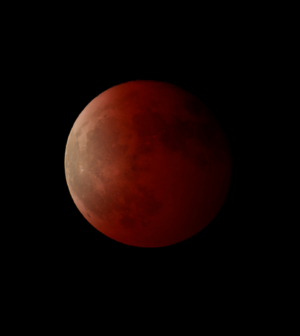
According to NASA a Lunar Eclipse occurs when the Sun, Earth, and Moon align so that the Moon passes into Earth’s shadow. In a total lunar eclipse, the entire Moon falls within the darkest part of Earth’s shadow, called the umbra. When the Moon is within the umbra, it will turn a reddish hue. Lunar eclipses are sometimes called “Blood Moons” because of this phenomenon.
How can I observe the eclipse?
You don’t need any special equipment to observe a lunar eclipse, although binoculars or a telescope will enhance the view and the red color. A dark environment away from bright lights makes for the best viewing conditions.
Residents in the eastern half of the U.S. and all of South America will be able to observe each stage of the lunar eclipse, and totality will be visible in much of Africa, western Europe, Central and South America and most of North America, according to NASA.
NASA will feature livestreams of the eclipse from locations across the globe! NASA will host an episode of NASA Science Live, from 11 p.m. – 12 a.m. ET. Watch at one of the following locations and ask your lunar eclipse questions using #AskNASA on social media.