
- Bryson Fire Near Mulholland Hwy in Malibu
- California State Propositions
- Paramount has Aquired Warner Bros. it’s Official
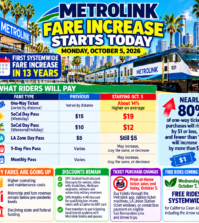
- Metrolink Fare Increase Starts Today
- LA Dodgers Vs. Atlanta Braves
- Jefferson Vs. Fremont High School
- Los Angeles Heat Wave Forecast
- SoCal Coastal Weather Alert
- First Day of Fall September 22, 2026
- The 78th Emmy Awards 2026
Steve Hilton (R) Governor Candidate Proposal to Abolish DMV
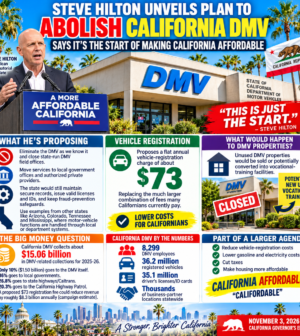
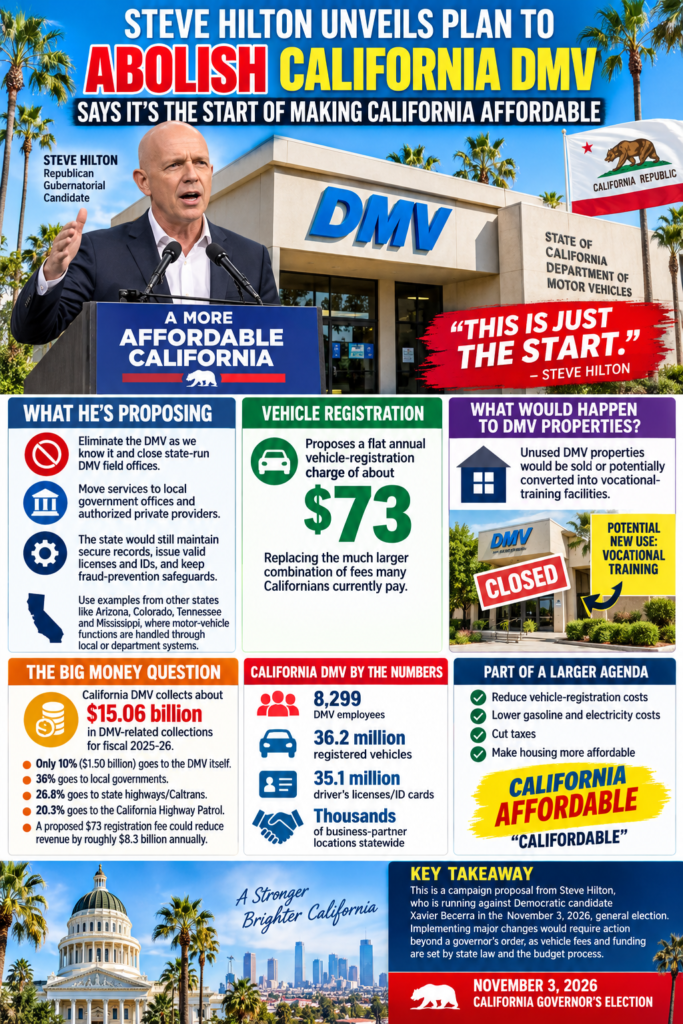
Republican California gubernatorial candidate Steve Hilton unveiled a proposal today, September 8, 2026, outside a DMV office in West Hollywood that would effectively abolish California’s traditional Department of Motor Vehicles field-office system. Hilton is presenting the proposal as the opening piece of a broader affordability agenda.
What Hilton is proposing
Hilton’s plan would eliminate the DMV as Californians currently know it, close state-run DMV field offices and shift many DMV functions to local government offices and authorized private providers. His proposal says the state would still maintain secure driver and vehicle records, issue valid licenses and IDs, and retain fraud-prevention safeguards.
A major part of the proposal involves vehicle registration costs. Hilton wants to establish a flat annual vehicle-registration charge of about $73, replacing the much larger combination of fees many Californians currently pay. Earlier in the campaign he described a similar proposal as limiting registration to the state’s basic registration charge.
His plan also calls for unused DMV properties to be sold or potentially converted into vocational-training facilities. The campaign points to states such as Arizona, Colorado, Tennessee and Mississippi as examples where some motor-vehicle functions are handled through transportation departments, counties or other providers rather than California’s current field-office model.
Why the money question is important
Eliminating the agency’s field offices is only part of the financial issue because the DMV collects far more money than it spends on itself.
California DMV figures estimate about $15.06 billion in DMV-related collections for fiscal 2025-26. Of the distribution, only about $1.50 billion, or 10%, goes to the DMV itself. Approximately 36% goes to local governments, 26.8% to state highways/Caltrans and 20.3% to the California Highway Patrol, with smaller shares going elsewhere.
That means dramatically reducing registration charges could affect funding beyond DMV operations. Reporting on Hilton’s proposal says his campaign estimates the registration change would reduce revenue by roughly $8.3 billion annually, and his proposal calls for reducing state road spending as part of addressing that loss.
What would happen to DMV services?
California currently has roughly 8,299 DMV employees, about 36.2 million registered vehicles, and more than 35.1 million driver’s licenses/ID cards. The DMV also reports thousands of business-partner locations, meaning California already has infrastructure outside traditional DMV offices for certain transactions.
So Hilton isn’t proposing that driver’s licenses, vehicle titles and registrations disappear. The proposal is essentially to break apart the traditional DMV delivery system and move services online, to local governments and to approved private providers.
“This is just the start”
The DMV announcement is being framed as part of Hilton’s larger campaign theme of making California more affordable. He has previously used the term “Califordable” for an agenda that includes reducing vehicle-registration costs, gasoline and electricity costs, taxes and housing expenses.
This is a campaign proposal from Hilton, who is running against Democratic gubernatorial candidate Xavier Becerra in the November 3 general election. Implementing major portions of the proposal—particularly changing fees and redirecting revenues—would likely require action beyond a governor simply ordering DMV offices closed because California’s vehicle fees and their distribution are established through state law and the budget process.

 Governor Candidate Proposal to Abolish DMV - Let's Talk Los Angeles)
 Governor Candidate Proposal to Abolish DMV)