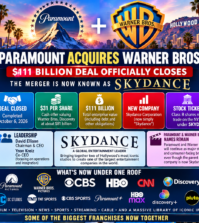
- Paramount has Aquired Warner Bros. it’s Official
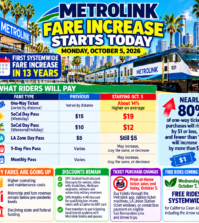
- Metrolink Fare Increase Starts Today
- LA Dodgers Vs. Atlanta Braves
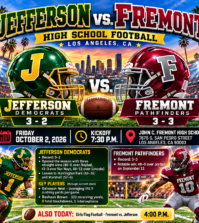
- Jefferson Vs. Fremont High School
- Los Angeles Heat Wave Forecast
- SoCal Coastal Weather Alert
- First Day of Fall September 22, 2026
- The 78th Emmy Awards 2026
- Catalina Island off the Coast of California set to eliminate Deer
- Lakers Honor Phil Jackson with a Statue at Crypto Arena
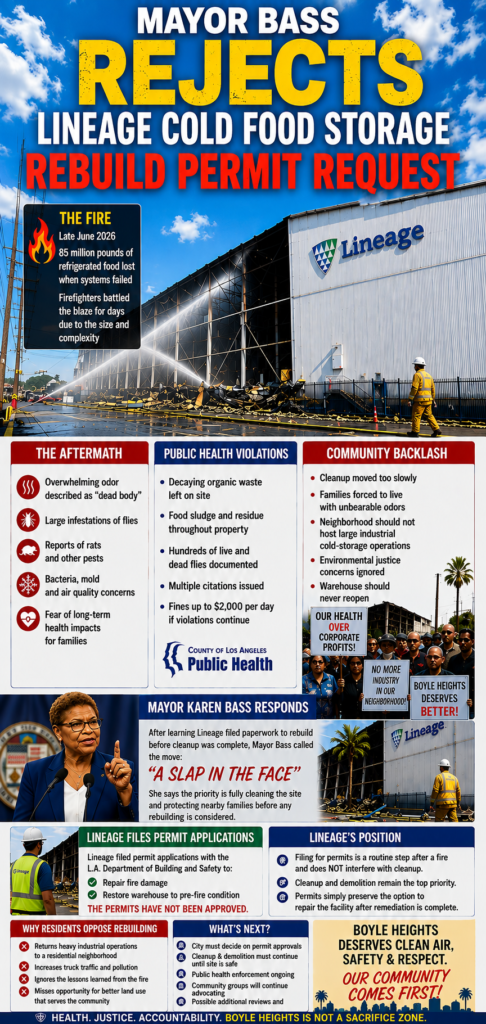
Mayor Bass Rejects Lineage Cold Food Storage Rebuild Permit Request
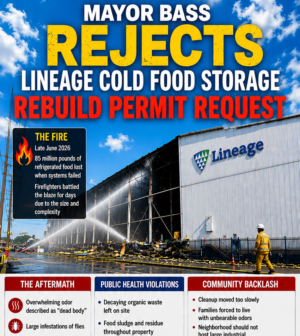
The Lineage Logistics cold storage warehouse fire in Boyle Heights has become one of the most controversial industrial disasters in Los Angeles in recent years. While firefighters eventually extinguished the massive blaze, many residents say the disaster did not end with the fire—it evolved into a prolonged public health and environmental crisis.
The Fire
- The massive fire broke out at the Lineage Logistics refrigerated warehouse in Boyle Heights in late June 2026.
- The warehouse contained an estimated 85 million pounds of refrigerated food, much of which spoiled after refrigeration systems failed.
- Firefighters battled the blaze for days because of the size and complexity of the warehouse.
- After the flames were extinguished, thousands of tons of rotting food remained inside the damaged facility.
The Aftermath
Residents say the weeks following the fire were even worse than the blaze itself.
Major complaints included:
- An overwhelming odor described by many neighbors as resembling a “dead body.”
- Large infestations of flies.
- Reports of rats and other pests.
- Concerns about bacteria, mold and air quality.
- Fear of long-term health impacts for families living nearby.
The warehouse sits near residential neighborhoods, schools and businesses, making the lingering conditions especially concerning for Boyle Heights residents.
Public Health Violations
Los Angeles County Public Health inspectors documented serious sanitation issues after the fire.
According to inspection reports:
- Decaying organic waste remained on site.
- Food sludge and residue accumulated throughout the property.
- Hundreds of live and dead flies were documented.
- Lineage received multiple citations.
- County officials warned the company it could face fines of up to $2,000 per day if conditions were not corrected.
Community Backlash
Many Boyle Heights residents say the disaster exposed longstanding concerns about industrial facilities operating close to homes.
Residents and community organizations have argued that:
- Cleanup was moving too slowly.
- Families were forced to live with unbearable odors.
- The neighborhood should not continue hosting large industrial cold-storage operations.
- Environmental justice concerns were being ignored.
- The warehouse should never reopen.
Community meetings and protests have focused on protecting neighborhood health rather than simply restoring the facility.
Mayor Karen Bass Responds
Los Angeles Mayor Karen Bass publicly criticized Lineage after learning the company had filed paperwork to rebuild before the cleanup was complete.
Bass said she could not believe the company would begin the rebuilding process while neighbors were still dealing with the aftermath, calling the move:
“a slap in the face”
She argued the priority should be fully cleaning the site and protecting nearby families before discussing reconstruction.
Lineage Files to Rebuild
Despite ongoing cleanup efforts, Lineage filed permit applications with the Los Angeles Department of Building and Safety to:
- Repair the fire damage.
- Restore the warehouse to its pre-fire condition.
The permits had not yet been approved at the time they became public.
Lineage’s Position
Lineage says:
- The permit application is a routine part of recovering from a fire.
- Filing for permits does not interfere with cleanup work.
- Cleanup and demolition remain the company’s top priority.
- The permit simply preserves the option to repair the facility after remediation is complete.
Why Residents Oppose Rebuilding
Many Boyle Heights residents believe rebuilding would:
- Return heavy industrial operations to a residential neighborhood.
- Increase truck traffic.
- Continue environmental burdens in the community.
- Ignore the lessons learned from the fire.
- Miss an opportunity to pursue a different land use that better serves neighborhood residents.
What’s Next?
Several issues remain unresolved:
- The city must decide whether to approve the rebuilding permits.
- Cleanup and demolition must continue until public health officials determine the site is safe.
- Public health enforcement remains ongoing.
- Community groups are expected to continue advocating against reopening the warehouse.
- Any future reconstruction could face additional public scrutiny and regulatory review.