- 2026 Midterm Elections:States Turn Blue Across America
- DoorDash Buys Instacart for $17 Billion
- L.A. Coastal Cities High Tides and Flooding
- Fall Back One Hour Halloween Night
- Vote For Rhonda Haymon “Superior Court Judge” Seat 64
- Bryson Fire Near Mulholland Hwy in Malibu
- California State Propositions
- Paramount has Aquired Warner Bros. it’s Official
- Metrolink Fare Increase Starts Today
- LA Dodgers Vs. Atlanta Braves
Indoor Farms the Future of our Crops
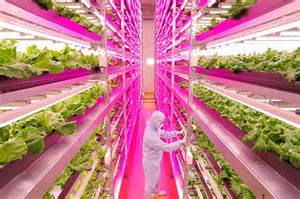
Indoor farms need light and a lot of it to grow crops, but that energy adds up big time in terms of cost and environmental impact. A Pinkhouse is a new type of indoor farm that grows crops using pink-colored light. Rather than bathing plants with white light (which has all the colors of the spectrum), a Pinkhouse uses a mix of red and blue light. By not using all the other colors, indoor vertical farms can cut down on their power bill with low-energy LED lights that emit just the right shade of magenta.
To grow sufficient quantities of food and produce in an indoor farm, crops have to be stacked. But this also means that each shelf has to have its own light source in order for the plants to grow. All these lights add up quick and so does the power bill. A new wave of research shows that “pink” light – a mix of red and blue wavelengths is all that a plant really needs to grow. In the whole spectrum of ROYGBV, the O, Y, G and V aren’t really necessary for plant growth, just the R and B. Besides reducing the amount of power for the lights, the LED lights are cooler, which also reduces the cooling load.