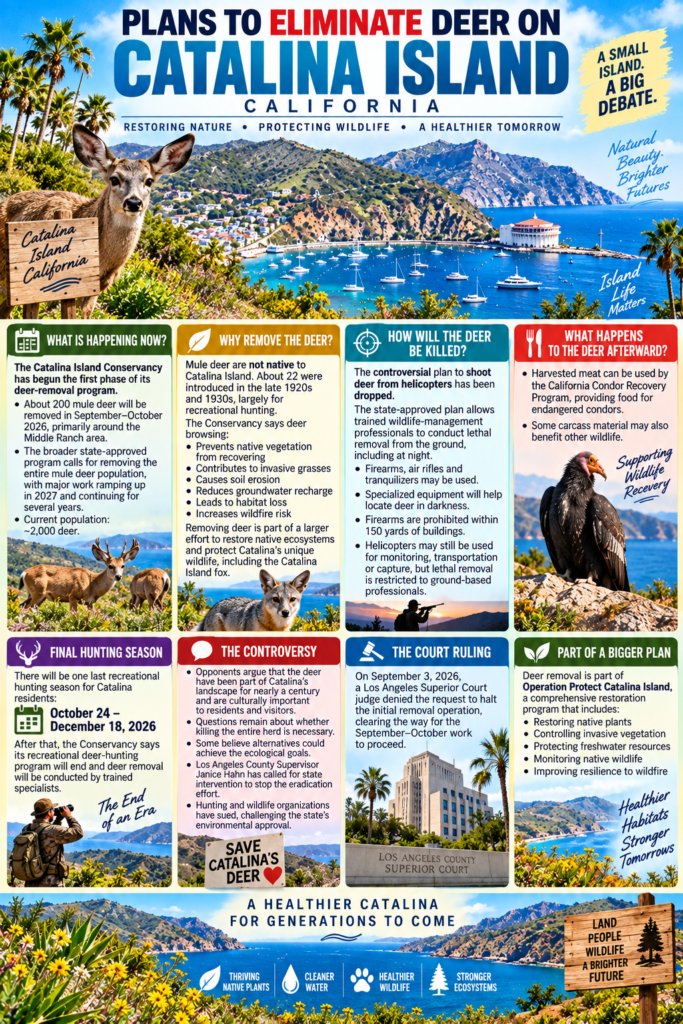
- Catalina Island off the Coast of California set to eliminate Deer
- Lakers Honor Phil Jackson with a Statue at Crypto Arena
- Steve Hilton (R) Governor Candidate Proposal to Abolish DMV
- Clippers Salary Cap Scandal
- L.A. Angels is set to be Sold
- Serial Butt Sniffer and Sex offender
- L.A. Power Outages and Extreme Heat
- Los Angeles Heat Wave
- LA Rescinds 12 Anti-Camping Zones in Hollywood
- 405 Delays Sepulveda Pass Ventura Boulevard and Mulholland Drive 8/21-8/24
Catalina Island off the Coast of California set to eliminate Deer

Catalina Island is one of Southern California’s most distinctive tourist destinations because visitors can get an island-vacation experience only about 22 miles off the mainland. The main tourism center is Avalon, while Two Harbors offers a quieter, more rugged outdoor experience. Visitors can make Catalina a day trip, weekend getaway, romantic escape, family vacation, or outdoor adventure.
🌴 What Catalina Island offers tourists
Avalon is the heart of the visitor experience. The compact waterfront town has hotels, restaurants, shops, beaches and a harbor filled with boats. Much of central Avalon can be explored on foot, while golf carts are a popular way to reach hillsides and scenic overlooks.
One of the island’s signature landmarks is the Catalina Casino. Despite the name, it isn’t a gambling casino. The striking circular Art Deco building opened in 1929 and contains the historic Avalon Theatre and a large ballroom, making it an important part of Catalina’s Old Hollywood history.
🏖️ Beaches & ocean activities
Catalina’s clear water is a major attraction. Visitors can swim, snorkel, scuba dive, kayak, paddleboard, sail and take boat excursions. Glass-bottom boats and semi-submersible tours allow people who don’t want to get into the water to see fish and the underwater environment.
Descanso Beach is especially popular near Avalon, offering swimming, snorkeling, kayaking, paddleboarding and beach facilities. Casino Point is another well-known location for snorkeling and scuba diving.
Wildlife & Catalina’s interior
A major part of Catalina that tourists sometimes miss is the rugged interior. Tours take visitors away from Avalon into hills, canyons and protected wildlands.
Wildlife can include the Catalina Island fox, bald eagles and the island’s famous bison herd. The bison descend from animals brought to Catalina during the 1920s.
The Eco-Tours Catalina Island Conservancy are particularly useful for visitors interested in the island’s ecology, conservation and interior landscapes.
Two Harbors — Catalina’s quieter side
Two Harbors is dramatically different from Avalon. Instead of a developed resort town, tourists find a small, rustic community surrounded by wilderness and ocean.
It’s particularly attractive for camping, hiking, kayaking, snorkeling, scuba diving, boating, fishing, mountain biking and paddleboarding. Harbor Sands also provides a more relaxed beach experience with lounge chairs, palapas and waterfront food service.
Seasonally, visitors can travel between Avalon and Two Harbors by boat in roughly 40 minutes, making it possible to experience both sides of Catalina during a longer visit.
The plan to eliminate Catalina Island’s non-native mule deer has now moved from proposal to active implementation, and it remains highly controversial.
What is happening now
As of September 2026, the Catalina Island Conservancy has begun the first phase of its deer-removal program. The initial operation is expected to affect roughly 200 mule deer during September and October 2026, primarily around the Middle Ranch area. The Conservancy confirmed this week that the culling is underway.
Why the Conservancy wants the deer removed
Mule deer are not native to Catalina. About 22 deer were introduced in the late 1920s and 1930s, largely to establish recreational hunting. With no natural large predator and no way to migrate off the island, their population expanded dramatically.
The Catalina Island Conservancy argues that deer browsing prevents native vegetation from recovering. According to its restoration plan, that contributes to invasive grasses spreading, soil erosion, reduced groundwater recharge and habitat loss. The Conservancy also argues that restoring native vegetation will improve Catalina’s resilience to wildfire.
The deer removal is part of a much larger program called Operation Protect Catalina Island, which includes restoring native plants, controlling invasive vegetation, protecting freshwater resources and monitoring native wildlife such as the Catalina Island fox.
How the deer will be killed
One major change from the original proposal is important: the controversial plan to shoot deer from helicopters was dropped.
The state-approved plan instead allows trained wildlife-management professionals to conduct lethal removal from the ground, including at night. During the September–October operation, professionals may use firearms, air rifles and tranquilizers, along with specialized equipment for locating deer in darkness. Firearms are prohibited within 150 yards of buildings.
There will also be one final recreational hunting season for Catalina residents, scheduled for October 24 through December 18, 2026. After that, the Conservancy says its recreational deer-hunting program will end and deer removal will be conducted by trained specialists.