- The 78th Emmy Awards 2026
- Catalina Island off the Coast of California set to eliminate Deer
- Lakers Honor Phil Jackson with a Statue at Crypto Arena
- Steve Hilton (R) Governor Candidate Proposal to Abolish DMV
- Clippers Salary Cap Scandal
- L.A. Angels is set to be Sold
- Serial Butt Sniffer and Sex offender
- L.A. Power Outages and Extreme Heat
- Los Angeles Heat Wave
- LA Rescinds 12 Anti-Camping Zones in Hollywood
Parasite Surge in Fruits & Vegetables
Cyclosporiasis Outbreak Update (As of Today – July 18, 2026)
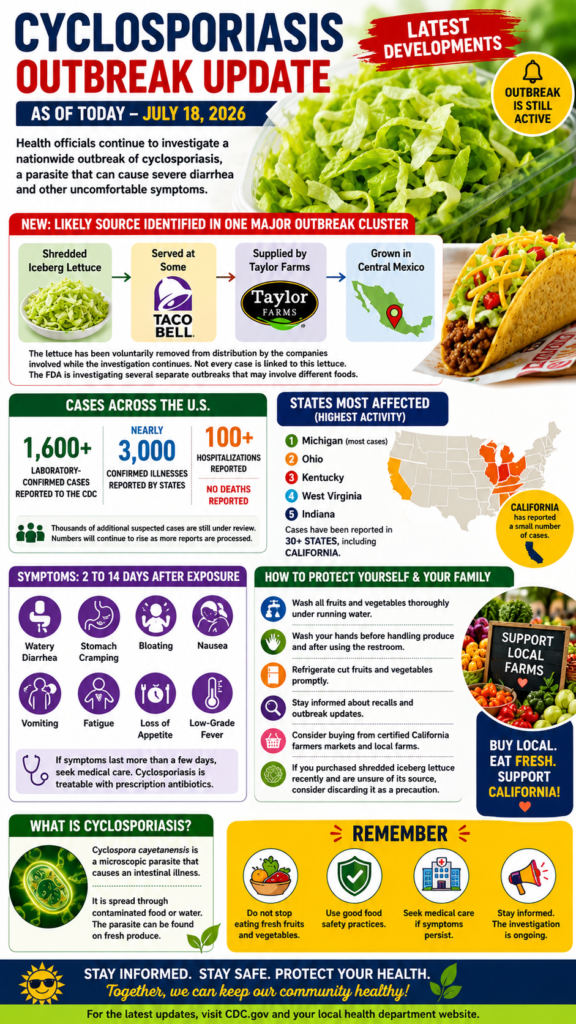
The nationwide Cyclospora (cyclosporiasis) outbreak is still active, and federal and state health officials continue to investigate the source. Since earlier this week, investigators have made significant progress in identifying the likely source of many illnesses.
Latest developments
- The outbreak remains ongoing with thousands of reported illnesses across the United States.
- The CDC has confirmed more than 1,600 laboratory-confirmed cases, while states have reported nearly 3,000 confirmed illnesses, and thousands of additional suspected cases are still under review. Reporting differences exist because state data often becomes available before CDC surveillance is updated.
- No deaths have been reported.
- More than 100 hospitalizations have occurred nationwide.
Suspected source
Investigators now believe that shredded iceberg lettuce is the primary source in one of the largest outbreak clusters.
Current findings indicate the lettuce:
- Was served at some Taco Bell restaurants.
- Was supplied through Taylor Farms.
- Was traced to lettuce grown in central Mexico.
- Has been voluntarily removed from distribution by the companies involved while the investigation continues.
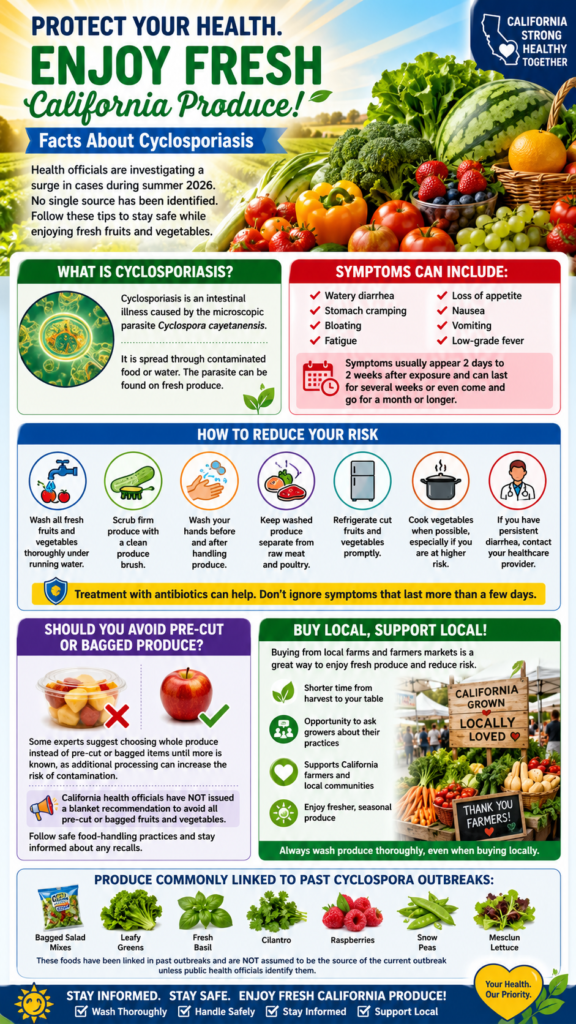
Cyclosporiasis is an intestinal illness caused by the microscopic parasite Cyclospora cayetanensis. Health officials across the United States are investigating a surge in cases during the summer of 2026. While California has reported cases, officials have not identified a single fruit or vegetable responsible for all illnesses, and there is currently no statewide recommendation to avoid all bagged or pre-cut produce. Investigators are still working to determine the exact source or sources of contamination.
Although California has reported only a small number of cases, the parasite has been identified in more than 30 states. Health officials recommend washing all fresh produce thoroughly, staying informed about recalls, and considering locally grown produce from certified California farmers markets and farms whenever possible.
As of July 14, 2026, the CDC says the current cyclospora (cyclosporiasis) outbreak has spread to at least 34 states, with more than 1,600 laboratory-confirmed cases and thousands of additional suspected cases still under investigation. Health officials expect those numbers to continue rising as more reports are processed.
States reporting the largest number of cases include:
- Michigan (by far the most cases)
- Ohio
- New York
- Kentucky
- West Virginia
- California (currently reporting a small number of confirmed cases)
- Florida
- Georgia
- Illinois
- Indiana
- Pennsylvania
- Virginia
In total, 34 states have reported confirmed cases, although many states have only a handful of infections.
California’s Situation
California has reported only a small number of confirmed cases (between 1 and 10) so far, according to current public health data. Officials emphasize that California is not considered one of the outbreak hotspots, but residents should still practice safe food handling because contaminated produce is distributed nationwide.
Where the Outbreak Is Most Severe
The outbreak is currently centered in the Midwest:
- Michigan – more than 3,300 reported illnesses
- Ohio – hundreds of cases
- New York – hundreds of cases
These three states account for a large share of reported illnesses, although infections have now been identified across much of the country.
What Produce Is Being Investigated?
Investigators are examining several types of fresh produce, including:
- Lettuce
- Bagged salad mixes
- Leafy greens
- Fresh herbs (such as cilantro and basil)
- Berries
Symptoms of Cyclosporiasis
Symptoms usually appear 2 days to 2 weeks after eating contaminated food or drinking contaminated water and may include:
- Severe watery diarrhea
- Stomach cramping
- Bloating
- Fatigue
- Loss of appetite
- Nausea
- Vomiting
- Low-grade fever
- Weight loss (in prolonged cases)
Without treatment, symptoms can last for several weeks or even come and go over a month or longer.
How to Reduce Your Risk
Health experts recommend the following precautions:
- Wash all fresh fruits and vegetables thoroughly under running water.
- Scrub firm produce such as melons, cucumbers, and potatoes with a clean produce brush.
- Wash your hands before and after handling fresh produce.
- Keep washed produce separate from raw meat and poultry.
- Refrigerate cut fruits and vegetables promptly.
- Cook vegetables when possible, especially if you are at higher risk of severe illness.
- If you develop persistent diarrhea lasting more than a few days, contact your healthcare provider, as cyclosporiasis can be treated with antibiotics.
Should You Avoid Pre-Cut or Bagged Produce?
Some physicians and food safety experts have suggested choosing whole produce instead of pre-cut or bagged items until more is known about the current outbreak because additional processing can increase opportunities for contamination. However, California health officials have not issued a blanket recommendation telling consumers to avoid all pre-cut or bagged fruits and vegetables. The advice remains to follow safe food-handling practices and pay attention to any future recall announcements.
Buying Local Can Be a Good Option
One practical way to reduce risk and support California agriculture is to purchase produce from:
- Certified California farmers markets
- Local family farms
- Community Supported Agriculture (CSA) programs
- Farm stands
Buying locally can offer several benefits:
- Shorter time from harvest to your table.
- Greater opportunity to ask growers about their farming and food safety practices.
- Supports California farmers and local communities.
- Fresher seasonal produce.
Even when buying locally, it’s still important to wash produce thoroughly before eating. The California Department of Public Health recommends purchasing produce from reputable sources, including certified farmers markets, while continuing to follow safe handling practices.
Produce Commonly Linked to Past Cyclospora Outbreaks
Previous outbreaks have been associated with:
- Bagged salad mixes
- Leafy greens
- Fresh basil
- Cilantro
- Raspberries
- Snow peas
- Mesclun lettuce
These foods have been linked in past outbreaks and should not be assumed to be the source of the current outbreak unless public health officials identify them through an investigation.
Bottom Line
There is no recommendation to stop eating fresh fruits and vegetables. Instead:
- ✔ Wash produce thoroughly.
- ✔ Consider buying whole produce rather than pre-cut products if you prefer an extra precaution.
- ✔ Support local California farms and certified farmers markets.
- ✔ Stay informed about any FDA or CDC recalls.
- ✔ Seek medical care if you experience severe or persistent diarrhea.
This balanced approach allows you to continue enjoying fresh produce while reducing your risk during the current investigation.