- California State Propositions
- Paramount has Aquired Warner Bros. it’s Official
- Metrolink Fare Increase Starts Today
- LA Dodgers Vs. Atlanta Braves
- Jefferson Vs. Fremont High School
- Los Angeles Heat Wave Forecast
- SoCal Coastal Weather Alert
- First Day of Fall September 22, 2026
- The 78th Emmy Awards 2026
- Catalina Island off the Coast of California set to eliminate Deer
“Sell by” “Best by” “Use by” Dates
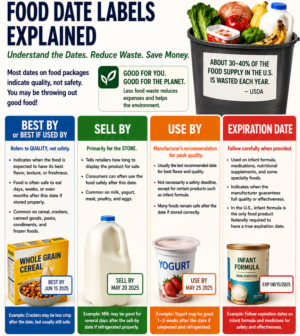
The Food Waste Problem
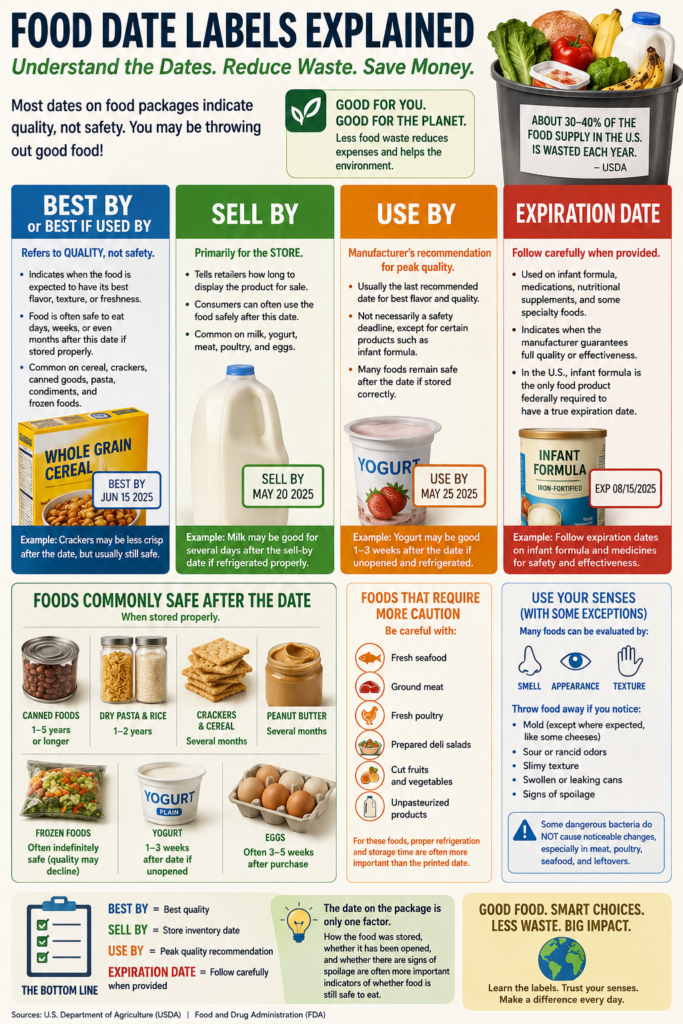
Consumers mistake quality dates for safety dates. According to the U.S. Department of Agriculture and the Food and Drug Administration, confusion over date labels contributes significantly to food waste. Millions of tons of edible food are discarded each year because people mistake quality dates for safety dates.
Practical Rule of Thumb
- “Best By” = Best quality
- “Sell By” = Store inventory date
- “Use By” = Peak quality recommendation
- “Expiration Date” = Follow carefully when provided
The date on the package is only one factor. How the food was stored, whether it has been opened, and whether there are signs of spoilage are often more important indicators of whether food is still safe to eat.
What Do Food Date Labels Really Mean?
“Best By” or “Best If Used By”
This date refers to quality, not safety.
- Indicates when the food is expected to have its best flavor, texture, or freshness.
- Food is often safe to eat days, weeks, or even months after this date if stored properly.
- Common on cereal, crackers, canned goods, pasta, condiments, and frozen foods.
Example: A box of crackers may be less crisp after the “Best By” date but is usually still safe to eat.
“Sell By”
This date is primarily for the grocery store.
- Tells retailers how long to display the product for sale.
- Consumers can often use the food safely after this date.
- Common on milk, yogurt, meat, poultry, and eggs.
Example: Milk may remain good for several days after the sell-by date if refrigerated properly.
“Use By”
This is the manufacturer’s recommendation for peak quality.
- Usually the last recommended date for best flavor and quality.
- Not necessarily a safety deadline, except for certain products such as infant formula.
- Many foods remain safe after the date if stored correctly.
Important: In the United States, infant formula is the only food product federally required to have a true expiration date.
What About “Expiration Date”?
An expiration date is different.
- Often used on medications, infant formula, nutritional supplements, and some specialty foods.
- Indicates when the manufacturer guarantees full quality or effectiveness.
- Follow these dates more carefully.
Foods Commonly Safe After the Date
Usually Safe Beyond the Printed Date
When stored properly:
- Canned foods: 1–5 years or longer
- Dry pasta and rice: 1–2 years
- Crackers and cereal: several months
- Peanut butter: months
- Frozen foods: often indefinitely safe (quality may decline)
- Yogurt: 1–3 weeks after date if unopened
- Eggs: often 3–5 weeks after purchase
Foods That Require More Caution
Be Careful With:
- Fresh seafood
- Ground meat
- Fresh poultry
- Prepared deli salads
- Cut fruits and vegetables
- Unpasteurized products
For these foods, proper refrigeration and storage time are often more important than the printed date.
Use Your Senses (With Some Exceptions)
Many foods can be evaluated by:
✅ Smell
✅ Appearance
✅ Texture
Throw food away if you notice:
- Mold (except where expected, like some cheeses)
- Sour or rancid odors
- Slimy texture
- Swollen or leaking cans
- Signs of spoilage
However, some dangerous bacteria do not cause noticeable changes, especially in meat, poultry, seafood, and leftovers.