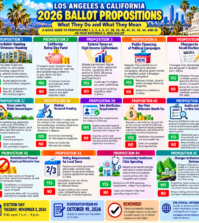
- California State Propositions
- Paramount has Aquired Warner Bros. it’s Official
- Metrolink Fare Increase Starts Today
- LA Dodgers Vs. Atlanta Braves
- Jefferson Vs. Fremont High School
- Los Angeles Heat Wave Forecast
- SoCal Coastal Weather Alert
- First Day of Fall September 22, 2026
- The 78th Emmy Awards 2026
- Catalina Island off the Coast of California set to eliminate Deer
Daylight Saving Time March 8, 2026

Daylight Saving Time and the Debate Over Making It Permanent. Each year in the United States, millions of people adjust their clocks twice—once in the spring and once in the fall—as part of a system known as Daylight Saving Time (DST). This practice shifts the clock forward by one hour in the spring to provide more daylight during the evening hours and shifts it back again in the fall to return to standard time. As Americans prepare to “spring forward” this weekend, the long-standing debate over whether the country should stop changing clocks and instead keep Daylight Saving Time year-round has once again become a topic of national discussion.
Daylight Saving Time has roots that go back more than a century. The concept gained widespread use during World War I as governments looked for ways to conserve energy by making better use of natural daylight. In the United States, the system was later standardized with the passage of the Uniform Time Act of 1966, which established a consistent schedule for when clocks would change across the country. Under this law, clocks move forward one hour on the second Sunday in March and move back one hour on the first Sunday in November.
In recent years, lawmakers have debated whether the nation should stop switching clocks entirely and remain on Daylight Saving Time throughout the year. The most prominent proposal addressing this issue is the Sunshine Protection Act. This bill would eliminate the fall time change and keep the United States permanently on the “spring forward” schedule. Supporters argue that this change would create more daylight during evening hours year-round, simplifying schedules and eliminating the disruption caused by adjusting clocks twice a year.
In 2022, the United States Senate passed the Sunshine Protection Act unanimously, signaling strong bipartisan support for the idea. However, the proposal did not advance in the United States House of Representatives, meaning it never became law. Because federal legislation is required to implement permanent Daylight Saving Time, the country continues to follow the current system of changing clocks each spring and fall.
Advocates for permanent Daylight Saving Time believe the change could offer several benefits. Many argue that eliminating the clock change would reduce confusion and improve public safety. Studies have suggested that the sudden shift in sleep schedules when clocks change may temporarily increase traffic accidents, workplace injuries, and even health issues such as heart attacks. In addition, supporters note that longer daylight hours in the evening could benefit businesses, restaurants, tourism, and outdoor recreation.
Despite these arguments, there is also significant opposition to the idea of permanent Daylight Saving Time. Critics point out that if DST were used year-round, sunrise in many parts of the country during winter would occur much later in the morning—sometimes after 8:00 or even 9:00 a.m. This could leave children traveling to school in darkness and disrupt natural sleep patterns. Some sleep researchers and health experts therefore argue that if the nation eliminates clock changes, it should adopt permanent standard time instead, which they believe better aligns with the body’s natural circadian rhythm.
While most of the United States observes Daylight Saving Time, a few places already avoid the practice. The states of Arizona and Hawaii do not change their clocks each year and remain on standard time throughout the year. However, states cannot independently adopt permanent Daylight Saving Time; federal law would need to change before that option becomes available.
For now, Americans will continue to follow the existing system. This weekend, on Sunday, March 8, 2026, clocks across most of the country—including California—will move forward one hour at 2:00 a.m. As a result, people will lose one hour of sleep but gain longer daylight hours in the evening. Until Congress passes legislation to end the practice, the biannual ritual of adjusting clocks will remain a part of life in the United States.